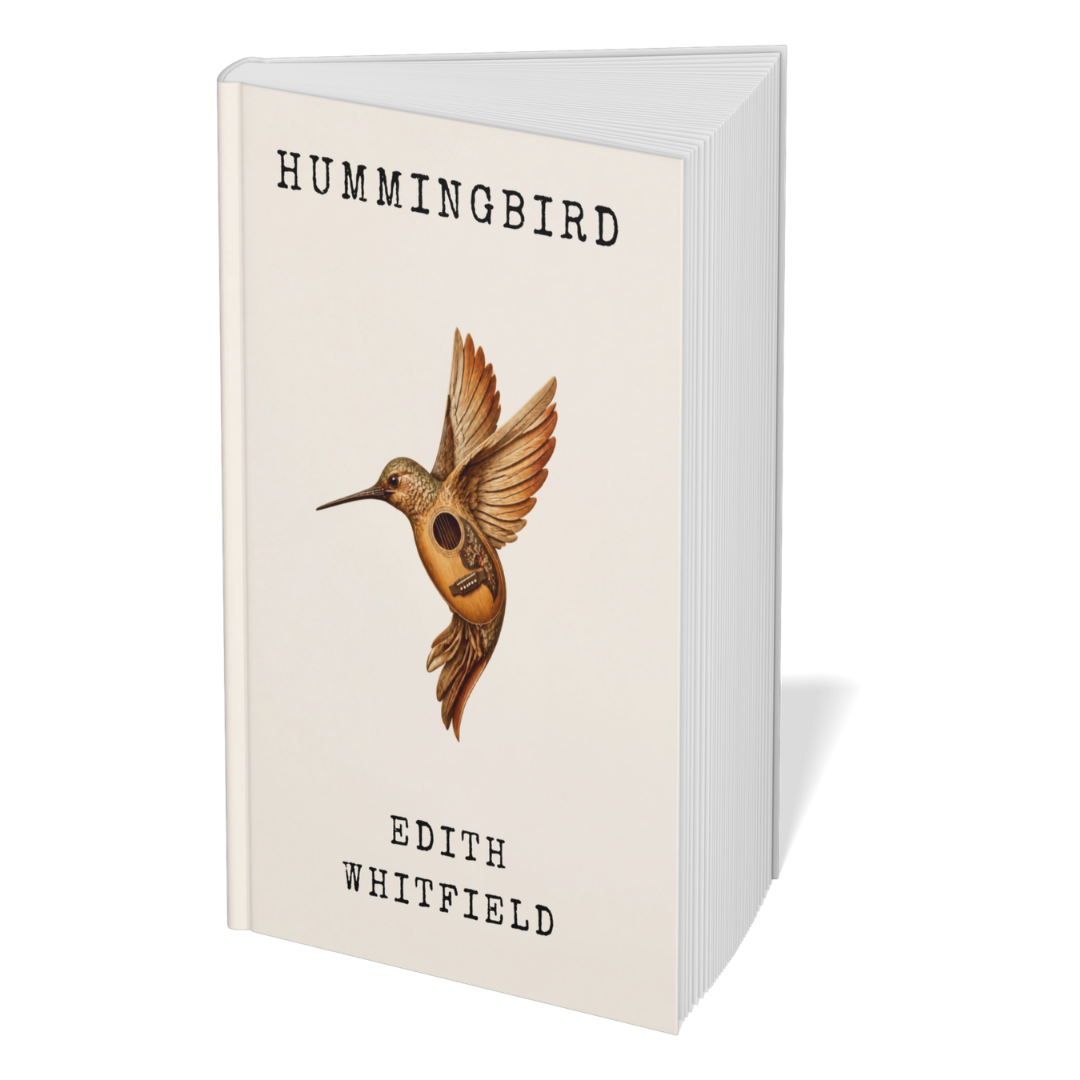
Hummingbird started with a question I couldn't put down, which was this: what does it cost to forgive somebody who hasn't earned it and isn't sorry? Most novels about faith answer the easier version—whether a person believes. Mercy Grace Robinson never wavers for a page. She is completely certain she was forgiven for the whole of her life, and she has never once had to hand that to anybody else at cost. That gap is the book. She can take a verdict. She has no idea how to give one away.
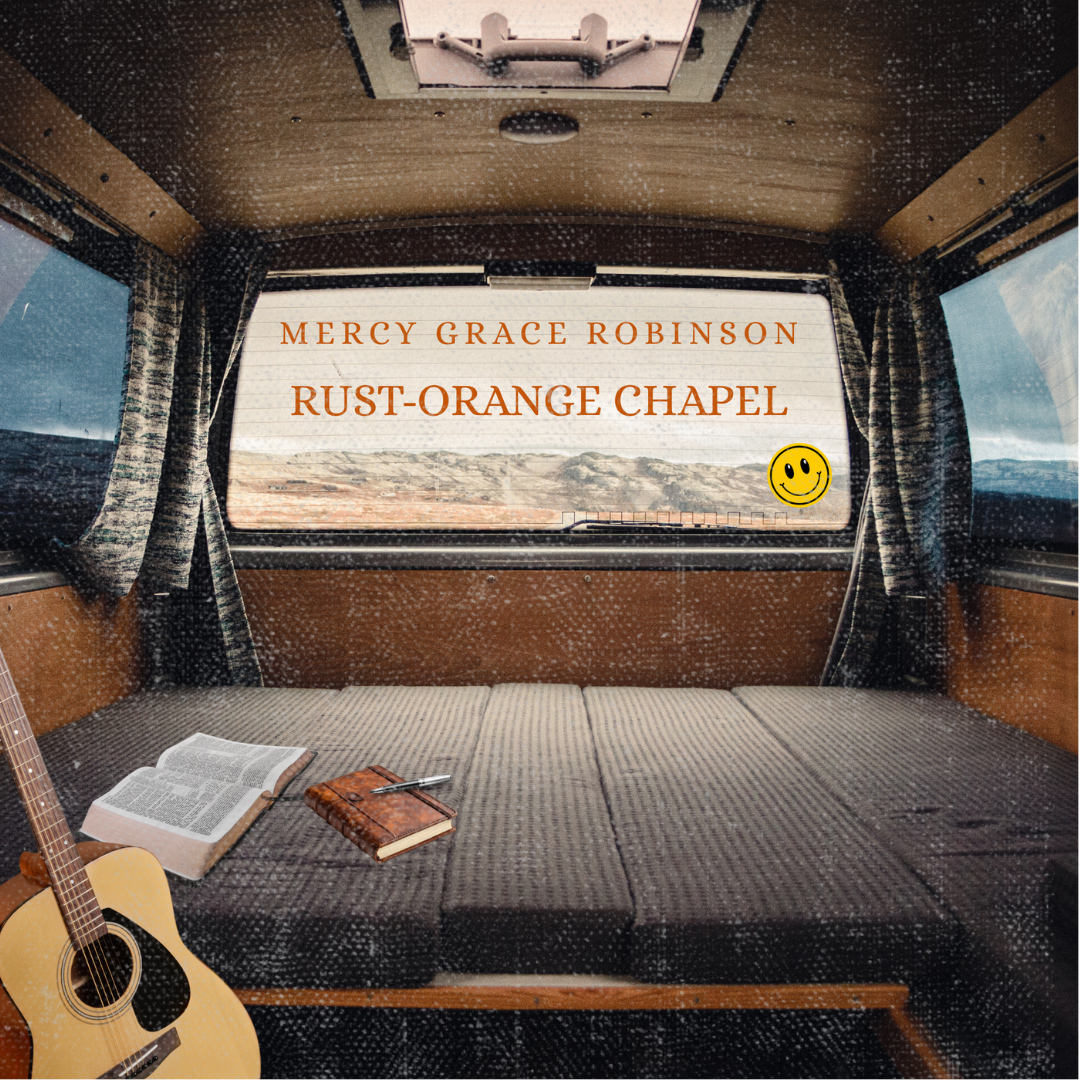
She arrived with the voice already on her—the flat delivery, the refusal to conclude a sentence, the habit of saying the largest thing in the room and then changing the subject. Once that was there, the rest followed. A twenty-year-old who can play anything she's heard once and won't sing for anyone whose opinion could reach her. A father she knows by a first name and a smudge. A 1979 Volkswagen that will not do more than fifty-five.
The songs came because they had to. You cannot write a novel narrated by a songwriter and keep the songs offstage—the reader will want to hear them, and a description of a good song is not a good song. So there are a lot of them, and they exist, and you can listen to them while you read. The voice singing them is generated. Every word in them was written and rewritten by a person. That's said plainly elsewhere on this site and it's said plainly here.
What follows below is an excerpt from a scene called "Here I am".
I'd rather you meet her yourself than take my word for any of it.
— Edith Whitfield
HERE I AM
There's moments in a life where you say yes to the hard thing before you've got any idea what the hard thing is. I'll do my best with this part. I pray. I do it often. And that Friday morning, sitting in a borrowed tent with the fair people scurrying around outside and the sun already coming through the nylon, something came to me not two seconds after I'd said amen.
A voice of a sort called out. Not a real one, where you'd turn and look over your shoulder. And not the thoughts that come up in your own head either. It was a voice in the air and it was silent. I know that doesn't hold together. I could tell you it was a feeling and that isn't right either. Closest I've got is a blanket. Something coming around me from the outside. That's the best I can do with it and I've had a long while to try.
What it said was my name.
I got the Bible out because other things started coming in behind it, one on top of the next, faster than I could sit with any single one. Genesis twenty-two. Exodus three. First Samuel three. Isaiah six. I went between them a good while before I saw what they had in common, and then I couldn't unsee it.
Abraham. Moses. Samuel. Isaiah. Every one of them called, and every one of them answering the same three words.
Here I am.
And not one of them knew what he was agreeing to when he said it. Abraham surely didn't. Isaiah's the one that got me—he's the one who doesn't even wait to be asked. He hears the Lord wondering out loud who'll go, and he says send me, and only after does he find out what he's signed for.
I don't know why I cried over that. There wasn't any sense in it sitting there. The sense came later. But I did cry, and I sat in that tent with my face all wet and smeared, and I looked up at nothing at all and said it out loud.
"Here I am." And that was that.